


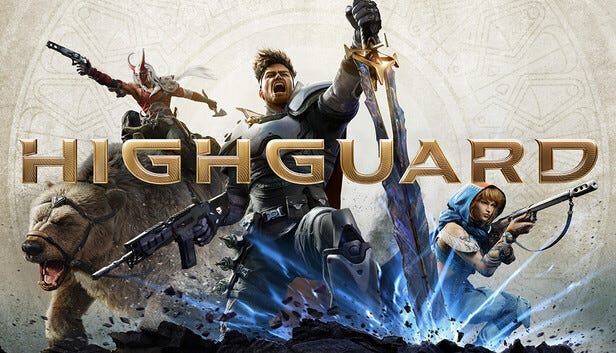
The final “one more thing” slot at The Game Awards can be considered the Holy Grail of marketing: a ticket to instant prestige and viral hype. But for Wildlight’s debut shooter, Highguard, it was the start of a nightmare. Sometimes the biggest stage just gives people a bigger target to hit.
Context and the poisoned chalice
Highguard is a recent shooter release from Wildlight, a studio with a serious pedigree. The team is mostly made of former Respawn talent. We’re talking 60 of the 100 or so devs who were there for the Apex Legends launch or soon thereafter. In a recent public interview, the founders said their original plan from Day 1 was to run it back with the Apex launch playbook: the shadowdrop.
Industry whispers suggest that TGA host Geoff Keighley, a long-time friend of Wildlight’s founders, personally advocated for the game to take the show’s coveted closing slot. But when the trailer failed to land, the prestige of the platform worked against it. Instead of awe, the audience felt confusion; instead of hype, they felt a vacuum. This void was immediately filled by a rabid mob of “anti-advocates,” eager to dogpile on a game that hadn’t yet found its voice.
Did Wildlight drink from the poisoned chalice? Probably. Was there an antidote to quell the mob? Potentially. Let’s dig in.
Why the internet started a dogpile
Most dogpiles don’t start because people just spontaneously decide to hate a game. They happen because nobody really knows what to do with it. When a title drops without a clear answer to who it’s for, or why it’s different, the internet asks a very specific question. It isn’t “is this good?” It’s “what is this supposed to be?” And if that question hangs in the air for too long, it turns into something much harsher: “who asked for this?” At that point, players aren’t talking about quality anymore; they’re questioning the game’s right to exist.
In Highguard’s case, the trailer felt rushed. It failed to define a clear identity. It’s just not obvious who this game was made for. One of the founders, Dusty, said in an interview that the game is for “all shooter players.” That’s too broad. It’s a category so large it means nothing. My theory is they aimed for a massive audience just to make the forecasting spreadsheet look good for investors. If they had focused on a sharper, more specific target player, and tailored the trailer to them, could Highguard have had a better shot at reaching its people?
The positioning risk with iterative development
There’s also the way the game was built. Like many live-service projects, the team likely used iterative development. Where the team generally iterates quickly with a learning, design oriented mindset. But, when a team builds based on their own tastes without a sharp “target player” in mind, you get a product that’s an aggregate of everyone’s ideas.
The devs have probably played for thousands of hours; they know the history of every choice. Often with very clear, well thought out reasons for why they make sense. But a new player? They don’t have that context. All those compounded choices just increase the mental load. This is a huge problem when you’re trying to invent a new genre label like “Raid Shooter.” Players don’t have the same background to sense make. The product has to be positioned in relation to what they already know and can comprehend. If there isn’t a set of schemas, lived experiences, or memories that players are familiar with, they just end up confused. And if that morphs into apathy, that’s where real trouble begins.
The creator economy and “Concord 2.0”
This whole mess is made worse by the environment games launch into now. The creator economy loves fast, emotionally charged takes. Calling a game “mid” or “generic” is an easy way to signal you have good taste without doing much actual work. The algorithms eat it up.
The Highguard reveal triggered those “another hero shooter” eye-rolls instantly. Whether the game is actually good almost doesn’t matter to a creator looking for clicks; the early discourse was already locked into the most efficient framing possible: “Concord 2.0.” Moreover, players themselves write scathing reviews without even really playing the game for more than 30mins, in the hope of getting featured in a creators “video essay” or “reaction video”.
It lands harder because many players are already frustrated. Live-service games ask for a lot of time. Aggressive monetization makes people suspicious. We’ve seen too many big releases promised for years only to be shut down in months. Players now hawk Steam charts and Twitch viewer counts to see if a game is worth their time. The default stance isn’t excitement anymore, it’s often skepticism…
What else could they have done?
The TGA slot was probably worth a fortune. Supposedly, Kotaku reported that a 60 second spot is about $450k, and a 3 min spot is over a million dollars. So a final slot would likely be higher. For a new studio with a new IP, you’d have to be incredibly bold to say no. But if the game was ready to ship, they should have stuck to the shadowdrop plan and released it the moment the trailer ended.
Instead, we got 45+ days of radio silence.
Players were left to fill that void with their own questions. Even if they were locked into a January 26 release for platform partnership reasons, they should have strongly considered moving it up.
The other option would have been to defend the game publicly. Look at Marathon. They got a lukewarm reaction early on, so the team dug in and chose to push back the launch significantly. In subsequent messaging, they were honest, showed the inner workings, and humanized the devs. It looks like they’ve actually turned a corner, with them flirting with the top 10 sellers chart on Steam lately. The jury is still out, but it does seem like things are heading in the right direction.
Wildlight might not have the cash for a long delay like Bungie/Marathon could likely afford. Many of the COVID era gaming ventures seem like they’ve been told funding is drying up and that they need to ship. What’s odd is that they did announce a 12-month roadmap. To me, this suggests they had some wiggle room to push back launch if they really wanted to, and truly fight for their game’s reputation before perception calcifies.
Lastly, what was also odd was the decision to go ahead with wine-ing and dining influencers in a behind closed doors event. This was also followed by paying those influencers to stream, on Twitch, at launch. This puts everyone in a weird spot. If you’re a paid creator, do you really want to defend a game in the middle of a massive dogpile? Probably not. You just play the game, keep quiet, and take the check.
Meanwhile, the folks who weren’t invited are already annoyed they missed a payday, so they double down on the negativity. In a world where players already don’t trust “sponsored” content, this just dampened the trust even more.
A hard lesson learned
For what it’s worth, I’ve tried Highguard. It’s a decent game with some rough edges. Of course, there are some issues with the gameplay itself. That’s reflected in the public reviews. But I’m a believer that perception often shapes reality. The vibes were heavily working against Highguard.
I really feel for the devs because you can tell this was a passion project. But here’s the lesson I’m taking away: if you don’t define your game’s story early, someone else will.
In the current ecosystem, that story is probably going to be a negative one. Without real advocates who feel like you’re speaking directly to them, there’s nobody to push back when the negative narrative takes hold. You have to lock in your true believers before you try to go broader. A game can be perfectly competent and still lose because no one was willing, or able, to stand up for what it was trying to be.

If this resonated, or annoyed you in a useful way, I’ll be writing more about defining your audience, positioning your game, solving for advocacy, AI trends for publishers, and games distribution more broadly.